
Author: Zespół RC-Laser, specjaliści czyszczenia laserowego
Injection mold cleaning
Removal of deposits without disassembly and downtime
Pulsed laser removes deposits, resins and residues from injection molds directly on the production line. No disassembly, no chemicals, minimal downtime.
* A quote from a photo is preliminary and indicative. The firm price follows an inspection on site — only then are the layer thickness and the condition of the substrate visible.
Laser cleaning result
Drag slider to compare before and after
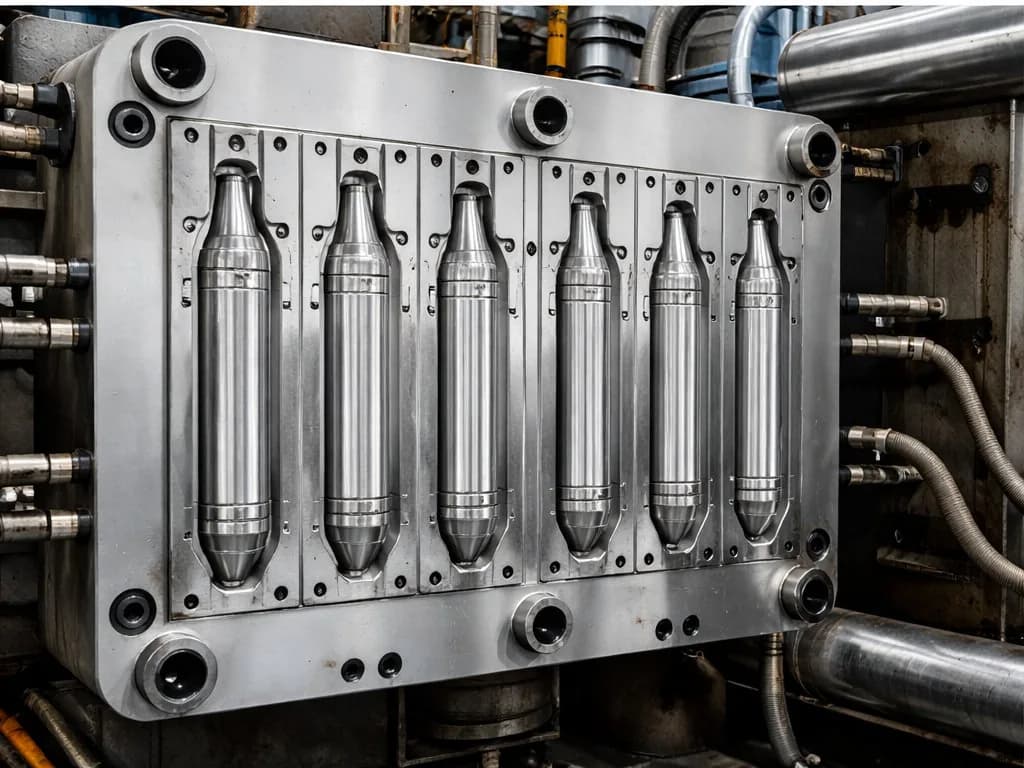
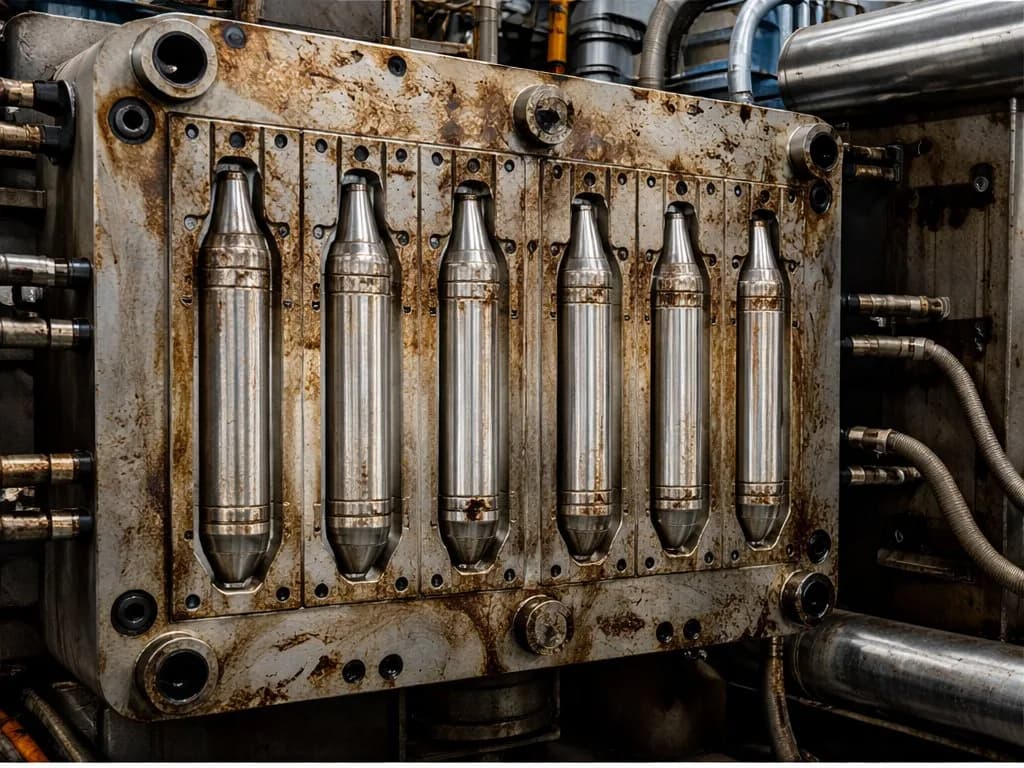
Problem — deposits shorten mold lifespan
Deposits from the injection process reduce part quality and increase mold wear. Traditional cleaning requires disassembly and long downtimes.
Solution — on-site cleaning
Pulsed laser removes deposits without mold disassembly. The process is fast, precise and doesn't damage working surfaces.
Cleaning process step by step
Analysis
We assess the type of deposits and mold condition.
Cleaning
Removal of deposits without damaging the working surface.
Quality test
Verification of cleanliness and quality of first parts.
What we work on
We clean injection moulds, moulding machines, cavities, slides, vents and hot runner components. We remove carbon deposits, burnt plastic residue, resins, release agents and deposits from degassing. We work on tool steel, including nitrided and coated, and on beryllium inserts.
What this method will not do
The laser will not restore a surface texture that was already damaged — if a cavity has been scratched with a brush or over-polished, it will show after cleaning. Nor does it replace dimensional restoration: it removes deposits, it does not add material.
Laser versus other methods
Against mechanical cleaning and brass brushes: cavity roughness stays unchanged, so the part does not suddenly release differently. Against dry ice: the mould does not cool down, which shortens the return to production. Against dip tanks: the mould stays in the machine.
Time and how it runs
The biggest saving is not in the cleaning itself but in not having to remove the mould. It can usually be treated in a service window or during a changeover, without cooling and without unclamping — turning a downtime of several hours into one of a few dozen minutes.
Cleaning PET packaging molds
A bottle manufacturer struggled with deposits on injection molds. Traditional cleaning required 2 days of downtime.
Frequently asked questions
Won't the laser damage the mold texture?
▼
No — laser parameters are chosen to remove only deposits while preserving original texture and surface finish.
How often should molds be laser cleaned?
▼
Depends on production intensity and plastic type. Typically every 3-6 months for molds in continuous operation.
Does the mold need to be disassembled?
▼
No — we clean molds directly on the injection machine, without disassembly. This minimizes downtime.
Which plastics generate the most deposits?
▼
Most deposits occur when processing PVC, ABS and glass fiber reinforced plastics.
Free consultation
Describe your project and we'll arrange a free consultation.
* A quote from a photo is preliminary and indicative. The firm price follows an inspection on site — only then are the layer thickness and the condition of the substrate visible.