
Author: Zespół RC-Laser, specjaliści czyszczenia laserowego
Laser cleaning of gates, fences and wrought-iron elements
Restoring gates, fences, railings and garden furniture without dismantling and without a mess on the property.
Laser removes rust and old paint from gates, fences, railings and wrought-iron elements, preparing them for fresh paint. We work on-site, at your property, with no dust from sandblasting and no chemicals.
* A quote from a photo is preliminary and indicative. The firm price follows an inspection on site — only then are the layer thickness and the condition of the substrate visible.
Laser cleaning result
Drag slider to compare before and after
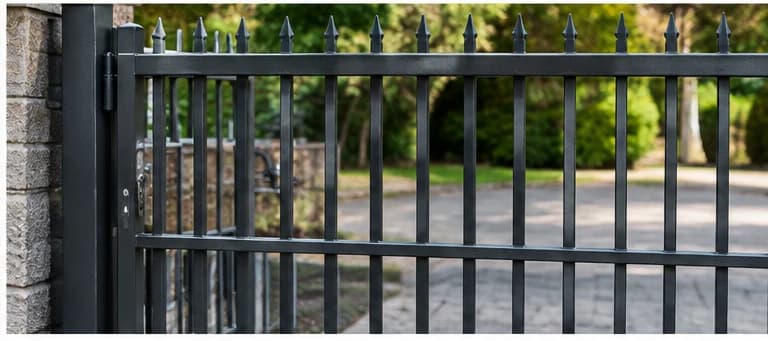
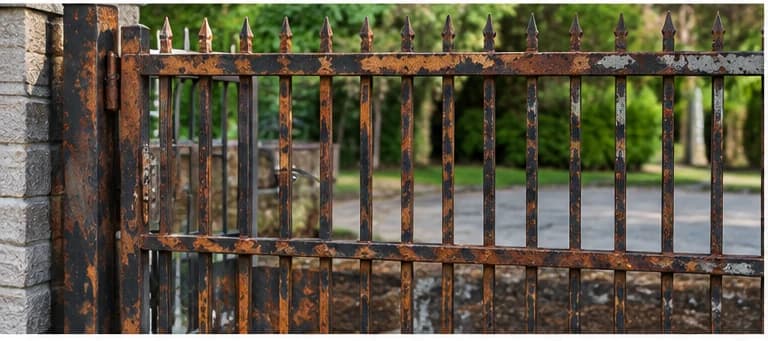
Problem — rust eats away at metal on the property
Gates, panels and railings lose their coating over the years, rust appears and paint flakes. Grinding is labor-intensive and uneven, and sandblasting leaves dust all over the property and on plants.
Solution — clean and on-site
We clean the element with a mobile laser right where it stands. The beam removes rust and paint layer by layer, preserving the detail of ornamental wrought-iron elements.
Cleaning process step by step
Inspection
A photo or a visit, we agree the scope and the quote.
Cleaning
We remove rust and paint with the laser, no dust, no chemicals.
Protection
Optionally we paint and apply anti-corrosion protection.
What we work on
We clean driveway and garage gates, fence panels, wickets, window grilles, railings, wrought iron fencing and decorative metalwork. The substrate may be bare steel, galvanised, powder coated, or brush-painted many times over the years.
What this method will not do
Zinc coating is thin and the laser will take it off along with the paint unless we hold back — on galvanised work we set parameters to leave the zinc, and we say plainly when that is not possible. We also do not repair deformed sections or worn hinges; that is a metalworker's job.
Laser versus other methods
Against on-site sandblasting: no abrasive across the lawn, the paving and the neighbour's car, so no need to sheet off the whole fence line. Against chemical stripping: nothing runs onto the driveway and no product soaks into the adjoining wall.
Time and how it runs
We clean the fence where it stands — no digging out posts, no hauling panels to a paint shop. What usually matters to the customer is that the gate keeps working throughout the job instead of lying dismantled on the grass for a fortnight.
Restoration of a 4-metre wrought-iron entrance gate.
Gate with paint chips and rust spots, prepared for two-coat painting.
Frequently asked questions
Do you need to remove the gate or fence?
▼
No. We work mobile, on-site — the element stays exactly where it's installed.
Will it leave dust like sandblasting?
▼
No. The laser uses no abrasive, so there's no dust cloud over the property or plants.
Can you paint it right after?
▼
Yes, we offer painting and anti-corrosion protection after cleaning, as a package.
How do you price a fence?
▼
Usually per running metre, or for the whole job. Send a photo for a preliminary estimate — the firm price follows an inspection of the fence.
Free consultation
Describe your project and we'll arrange a free consultation.
* A quote from a photo is preliminary and indicative. The firm price follows an inspection on site — only then are the layer thickness and the condition of the substrate visible.