
Author: Zespół RC-Laser, specjaliści czyszczenia laserowego
Car body cleaning
Surface preparation for painting and restoration
Pulsed laser gently removes old paint, rust and contamination from car bodies without risk of thermal deformation.
* A quote from a photo is preliminary and indicative. The firm price follows an inspection on site — only then are the layer thickness and the condition of the substrate visible.
Laser cleaning result
Drag slider to compare before and after
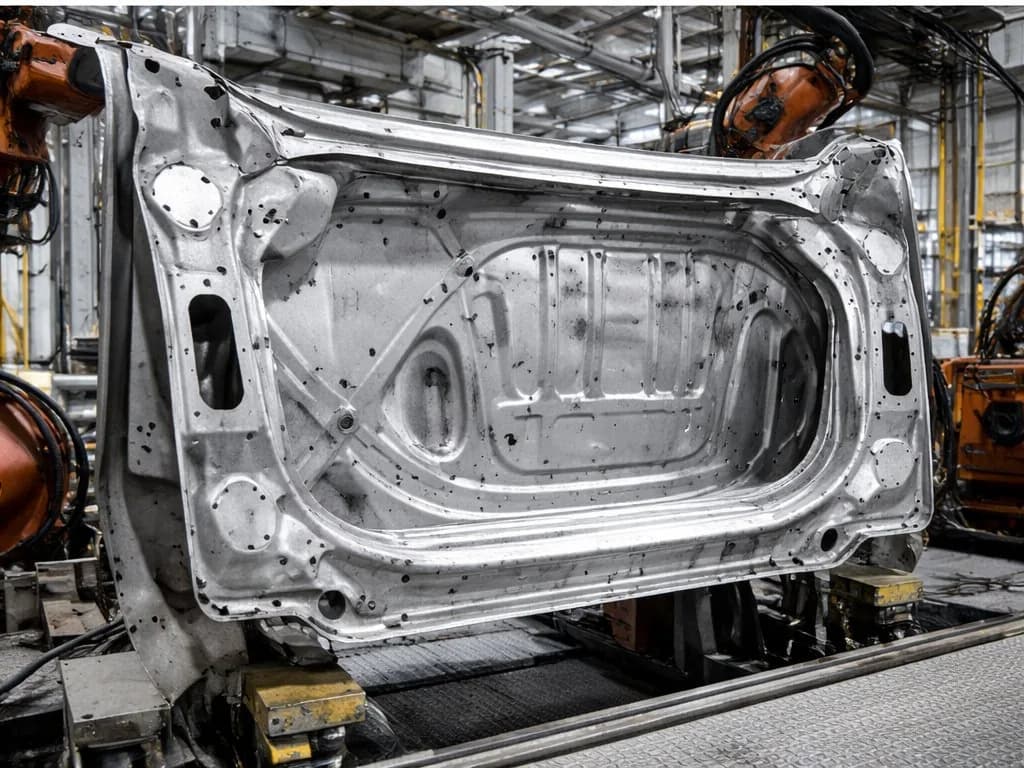
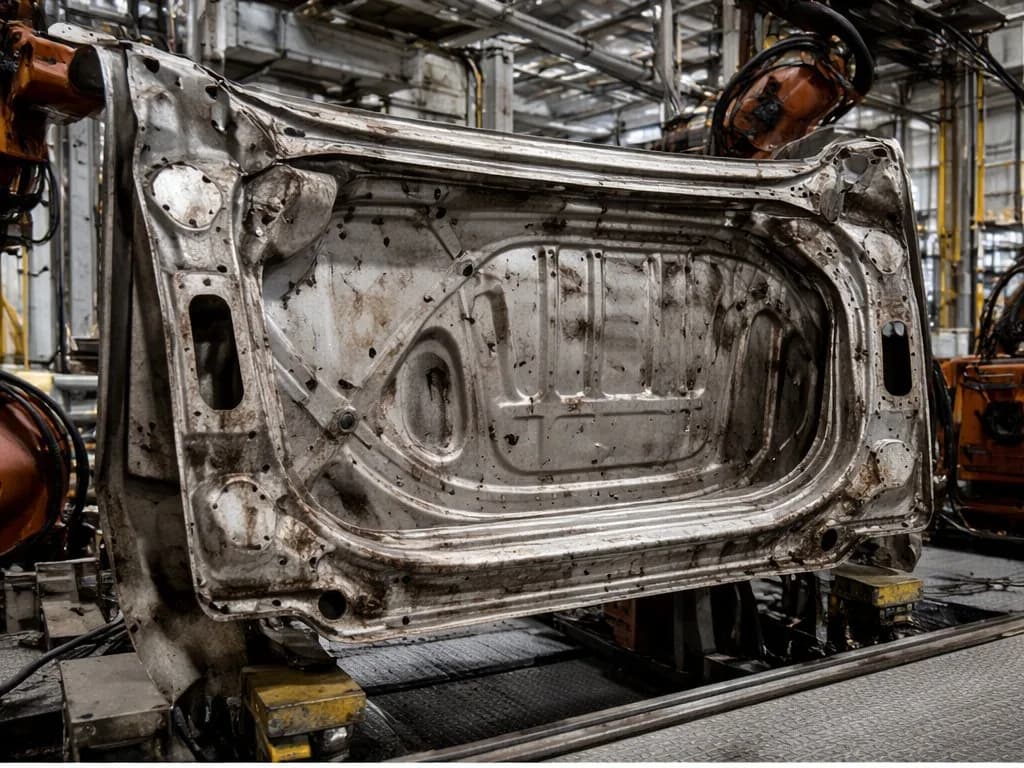
Problem — old paint and corrosion on car body
Vehicle restoration requires thorough surface preparation. Traditional sandblasting can deform thin sheet metal, chemicals are toxic.
Solution — laser precision
Pulsed laser works with minimal surface heating. Removes paint layer by layer, without mechanical stress and deformation.
Cleaning process step by step
Inspection
We assess body condition and coating thickness.
Cleaning
Removal of paint and rust with controlled precision.
Preparation
Surface ready for priming and painting.
What we work on
We clean body panels, underbodies, suspension parts and components heading back to the paint shop. We take off old paint, primer, filler and surface rust, including places a disc cannot reach: swages, seams, edges and sill interiors through access holes.
What this method will not do
On vehicles corroded right through, the laser will show the problem but not fix it. We also do not remove thick layers of body filler — that material comes off mechanically, and the laser is left for the final stage of cleaning the panel beneath it.
Laser versus other methods
Against sandblasting: no distortion of thin panels and no grit left in sills and closed sections, from which it can never be fully recovered anyway. Against chemical dipping: no stripping the car to a bare shell and no waiting for the product to dry out of cavities.
Time and how it runs
We work in stages and show the result after each section, because restoration usually means removing exactly as much as needed and no more. If paint is to stay in places, we agree the boundaries beforehand — the laser can be guided to within millimetres.
Mercedes W123 body restoration
Classic Mercedes from the 80s required complete restoration. Many layers of old paint and corrosion spots in sills and wheel arches.
Frequently asked questions
Won't the laser damage the car body sheet metal?
▼
No — pulsed laser works with minimal heating. Surface temperature doesn't exceed 80°C, which is safe for sheet metal.
How many paint layers can be removed?
▼
Laser removes all layers — from clear coat, through primer, to bare metal.
Can only selected areas be cleaned?
▼
Yes — laser precision allows spot cleaning, e.g. only rust spots or damaged fragments.
How much does body cleaning cost?
▼
Price depends on surface size and number of layers. Send a photo, you will get a preliminary estimate and we will arrange a free inspection.
Free consultation
Describe your project and we'll arrange a free consultation.
* A quote from a photo is preliminary and indicative. The firm price follows an inspection on site — only then are the layer thickness and the condition of the substrate visible.